
If I was going to be traveling around to the local state capitals, there was no state capital that was more local than the capital of Maryland in Annapolis. Unlike the other places that I was visiting, where I had mostly never bothered to stop before, I had been to Annapolis on many, many occasions over the years. I grew up in the Baltimore suburbs, went to undergrad and graduate school at the University of Maryland, and then bought a house with my wife in the Maryland suburbs of Washington DC. I've lived my whole life in the state of Maryland and therefore this state capital holds special meaning for me. Annapolis is a beautiful town that often gets highly rated on those "best places to live" lists in the USA, a small city based around the waters of the Chesapeake Bay that has managed to preserve much of its historic colonial atmosphere. It also doesn't hurt that this is one of the most affluent areas in Maryland, with gorgeous mansions overlooking the river located all over Annapolis. We would be visiting several of the most famous sites in Annapolis so that I could take my usual pictures, starting at the Maryland State House and then passing through the waterfront before finishing up at the Naval Academy.


Annapolis benefits from having an excellent geographic location, situated at the mouth of the Severn River along the Chesapeake Bay about 25 miles / 40 kilometers south of Baltimore and 30 miles / 50 kilometers east of Washington DC. Because of its nearby location, my wife Liz came along with me for this short trip so that we could enjoy a lunch together. It took about 45 minutes to make the drive from our home on a cloudy morning in late December, just a few days before the year rolled over to 2026. Maryland Route 50 is infamous for having bad traffic from commuters making the drive between Washington DC and Annapolis, though fortunately there wasn't much to speak of on this day during the winter holidays. We parked in a garage next to this visitor's center which had a sculpture of a blue heron outside and then maps and brochures inside. This would have been more helpful if we hadn't already been very familiar with Annapolis.

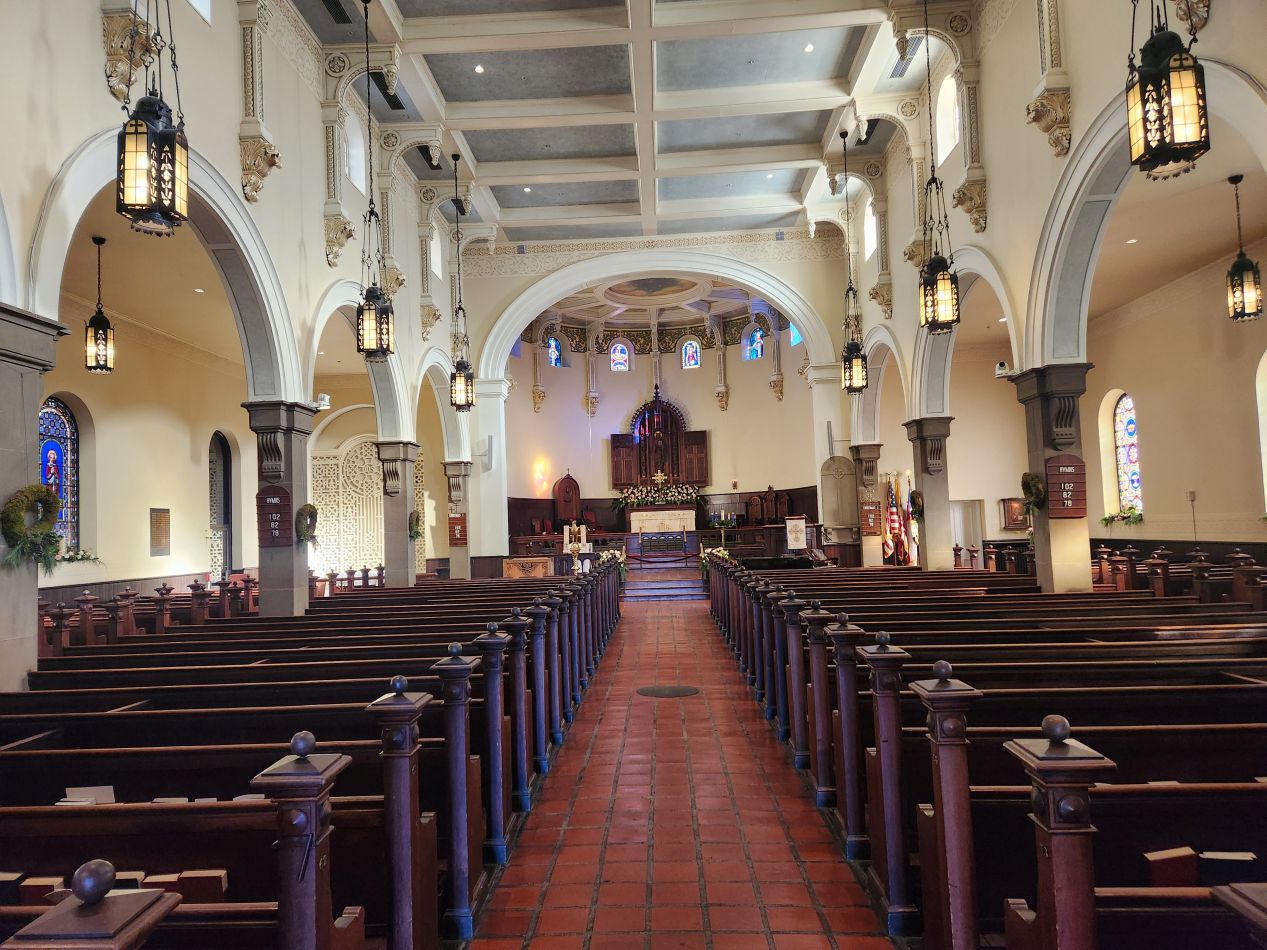


Our first stop after exiting the visitor's center was this pictured historic church named St. Anne's Parish. This was the first church to be built in Annapolis in 1704 though the current building is the third one to stand on this site and dates back to 1859. St. Anne's sits on top of a hill and inside a traffic circle today, overlooking the rest of the town which spreads out below it along the water. This church was closed when we first walked past but I was able to go inside later in the day when we were returning to our parked car. This Anglican church was built in Romanesque Revival styling and incorporated part of the tower from the previous church which was unfortunately burned down in a fire. As usual, there was no one else inside while I wandered around the church; I think the best feature was the pipe organ in the back which looked to be recent and quite expensive.


It's a short walk of about one block from St. Anne's Parish over to the Maryland State House, seat of government for the state. Our path took us past the governor's residence for Maryland; this brick building dates back to 1870 and looked to be an elegant, but not gigantic, place of residence. While I believe that it is possible to take a tour of the building, everything was shut up tight on this particular morning. Right next to the governor's residence was a small plaza known as Lawyer's Mall, a gathering place which has been used for public protests and media events over the last few decades. When Maryland state officials give press conferences outside, they often pick this spot with the Maryland State House in the background. Lawyer's Mall added a statue of Thurgood Marshall relatively recently in the 2010s to commemorate the first black Supreme Court Justice who was born in Maryland. There were additional statues here addressing some of the most famous cases that Marshall worked on, including the Brown vs Board of Education case that struck down segregation in law, if not always in practice.

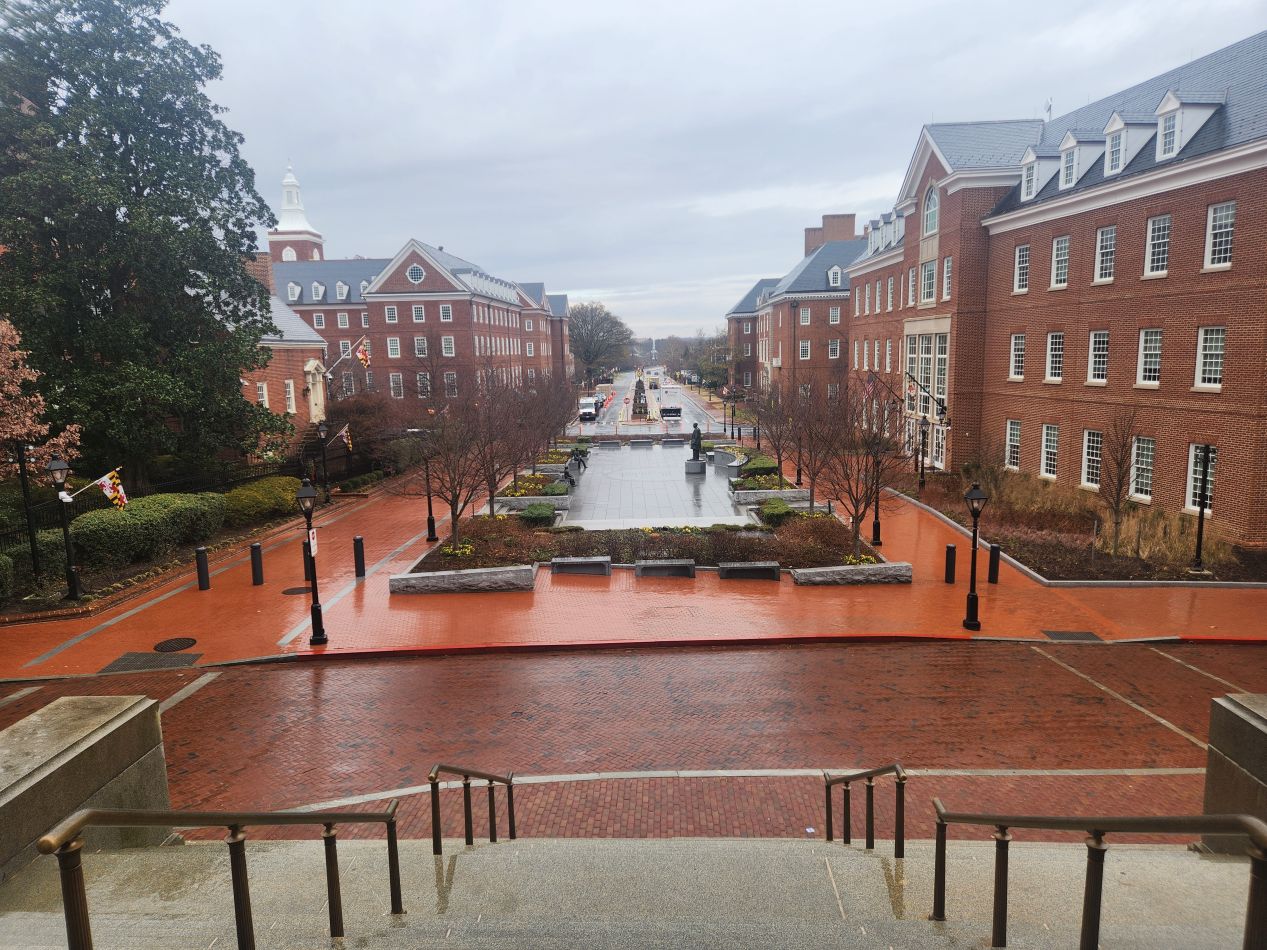


And of course Lawyer's Mall was right next to the Maryland State House itself. This building has the distinction of being the oldest state capital in continuous legislative use, with the core of the building dating back to 1772 and having been the meeting place for the Maryland state legislature during that entire span. The Maryland State House is old enough that it predates the founding of the United States itself and the building briefly served as the nation's capital for about a year in 1783 and 1784 during the short-lived Articles of Confederation period. We walked around the small grounds of the legislative building, located again within a traffic circle, taking in the view from atop the building's steps looking west past Lawyer's Mall. Those red brick buildings house most of the Maryland state government's functions (things like the state treasury and the offices for the various state legislators) since the historic state house is much too small to contain them. We also walked past the tiny Old Treasury Building which is the oldest public building in Annapolis. It predates even the Maryland State House and was constructed in 1735 for use as, well, a treasury.
There also used to be a statue of Roger B. Taney on the grounds of the Maryland State House, who was chief justice of the Supreme Court from 1836 to 1864. Taney was probably the most famous political figure from the state of Maryland, which was the reason there was a statue of him located here for several decades. However, Taney is most famous for handing down the infamous Dred Scott decision that ruled that blacks could not become American citizens and that slavery could not be prohibited in any state or territory, a decision which is widely seen as being the worst in the history of the Supreme Court and also directly precipitating the Civil War. Therefore the statue of Taney was removed in 2017 as it was pretty universally agreed that this was not a historical figure worth celebrating. The other most famous politician from Maryland would likely be Spiro Agnew, Nixon's vice president, who had to resign in disgrace for taking bribes in office. Come on Maryland, we can do better!

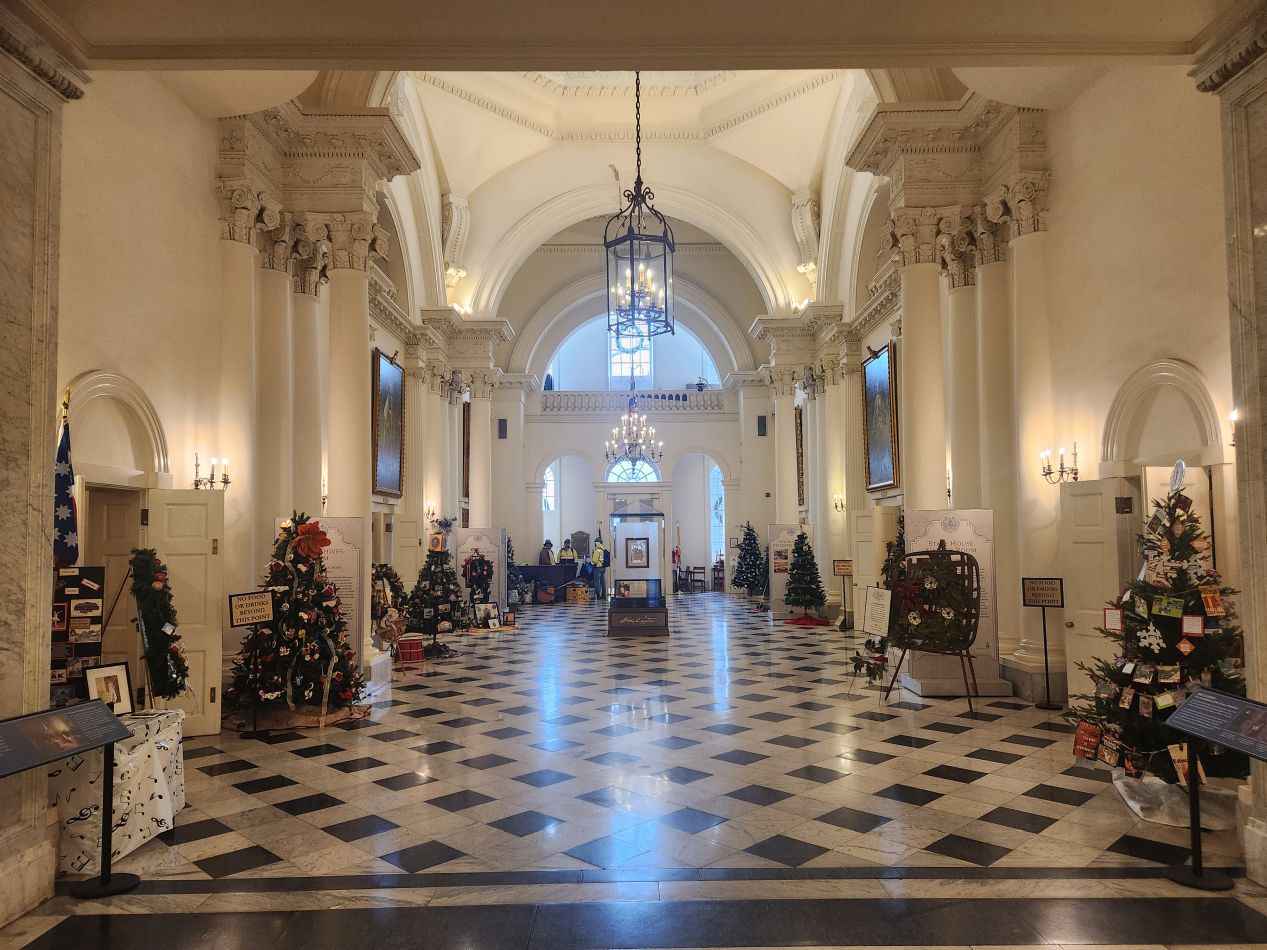


We entered the Maryland State House and headed up to the second floor which is where all of the various interesting stuff could be found. These pictures were taken in the rotunda where a series of Christmas trees had been set up, one for each of Maryland's 23 counties. The second picture above captures the entirety of the original Maryland State House which is downright tiny by modern standards. The State House was expanded with an annex in 1902 that contains the current legislative chambers, with the addition to the building done neatly enough that it's easy to miss the division unless specifically looking for it. The rotunda contains two historic documents in a protected display case: the original text of Washington's resignation speed to Congress and the handwritten text for the Star Spangled Banner by Francis Scott Key. If you ever wanted to see what George Washington's handwriting looked like, you can find it on display here.


These were the two chambers of the Maryland state government, the House of Delegates and the Maryland Senate. The House of Delegates is the lower chamber of the legislature, the one with the blue carpeting and more cramped seating. Maryland's House of Delegates has 141 members which, unusual for American state governments, are elected to four year terms. There really isn't enough room in the House of Delegates chamber for 141 people (Maryland had a considerably smaller number of delegates until a series of reforms took place in 1972) but they cram in the seats for everyone anyway where voting is handled electronically. Unfortunately visitors were not allowed onto the House floor itself and could only peek in through the doorway which limited the pictures I could take of this room. There is a public gallery up on the third floor but that's also closed unless the House is in session.
The other chamber with the red carpeting was the home of the Maryland Senate. This chamber felt considerably more spacious with only 47 state senators being seated here, who are also elected to four year terms. The state of Maryland is extremely Democratic in nature and the makeup of the two chambers reflected that fact, with 102 Democrats against 39 Republicans in the House of Delegates and 34 Democrats against 13 Republicans in the Maryland Senate at the time of writing. Notably these numbers have also barely shifted in recent years: Democrats have held 33, 35, 33, 32, and 34 seats in the Maryland Senate over the last five legislative terms. The vast majority of Maryland's population lives in or around Baltimore / Washington DC and votes Democratic, then the rural parts of the state in western Maryland and on the Eastern Shore vote Republican.

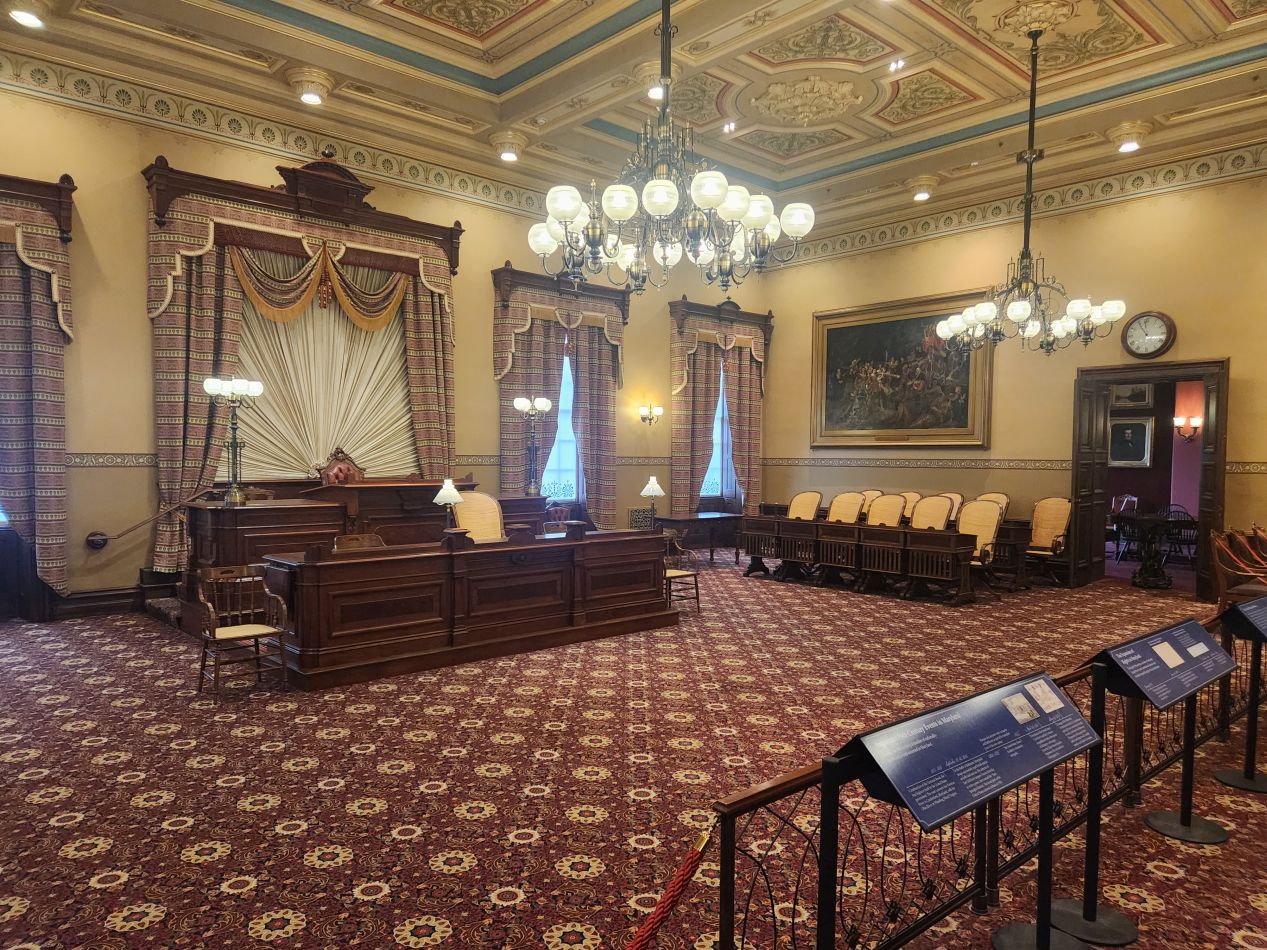


The original portion of the Maryland State House has been converted into a museum where the historic legislative chambers have been preserved for display to the public. This was the Old House of Delegates chamber where the state legislature met until the early 20th century when the annex was added. The room had largely been left empty without the desks and seats that would have been placed here when it was in use. There were also two recent statues added here depicting Harriet Tubman and Frederick Douglass, both of them born into slavery in the state of Maryland before becoming two of the most famous abolitionists. Although neither of them was present in the state house when Maryland officially voted to abolish slavery in 1864, their statues have been added as witnesses to the great deed that they worked to achieve. Both of these statues are life-sized and we were surprised to see how short Harriet Tubman had been, only standing about 5 foot 2 inches (about 157 cm). I didn't expect to see one of the leaders from Civilization 7 when visiting the Maryland State House but there you have it.


There are a couple of additional rooms with museum exhibits in the historic portion of the Maryland State House. The first such room pictured above was the State House Caucus Room which was originally used for holding land records and legal cases. Today it's best known for displaying the silverware from the USS Maryland, a battleship commissioned in the early 20th century which was present during the attack at Pearl Harbor and managed to avoid sinking. The other side of the hall held a small exhibit about the history of the Maryland State House itself. The building is best known for its wooden dome which is the largest such structure in the nation to be constructed entirely without the use of nails. The dome has needed a lot of maintenance over the years but it's definitely one of the most famous symbols associated with Annapolis. There was a debate over whether to maintain its modern white color or go back to the original muticolored gold from the colonial period, with the white color unfortunately winning out during the most recent rennovation. Yes, the gold coloring is garish, but I think it looks cool - they should repaint the dome to look like this!
Just as this part of the building houses the Old House of Delegates, it also contains the Old Maryland Senate chamber as well. However, this room was under construction at the time of our visit and therefore we were not able to go inside. I've been able to visit the Old Maryland Senate on a number of previous occasions, though without photographing it, so here's an image off Wikipedia for the curious. This is the room where the United States Congress met in 1783-1784 when Annapolis was briefly the nation's capital, and therefore it's the place where Washington famously resigned his commission on 23 December 1783. There's a statue of Washington inside to commemorate this event and the chamber was being renovated to update and modernize the room for visitors. Less famously but arguably more importantly, this was also the place where Congress officially ratified the Treaty of Paris on 14 January 1784 to end the Revolutionary War and formally establish the United States as an independent nation.

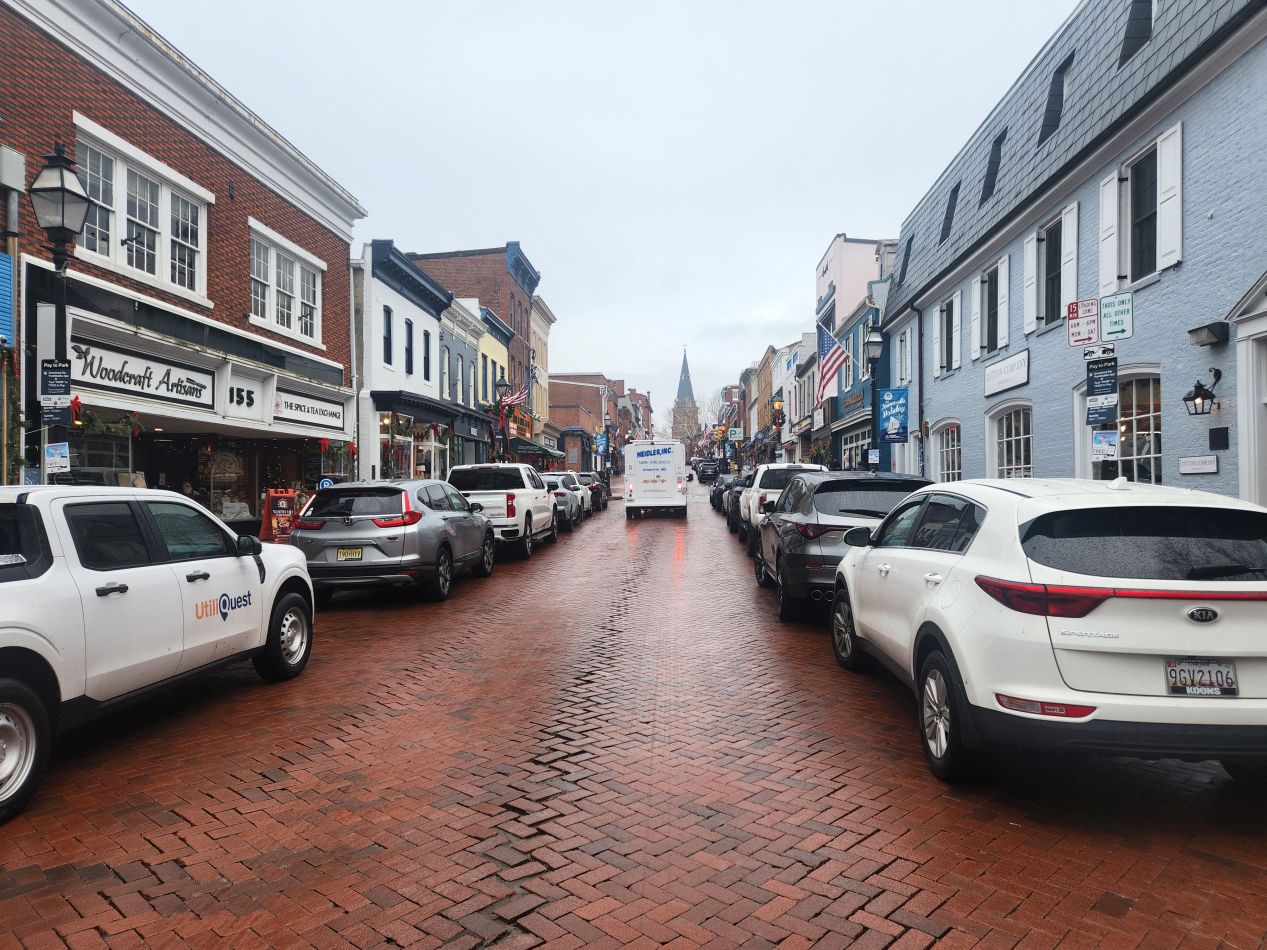


We wrapped up at the Maryland State House a little bit before noon and began the short walk down towards the harbor. A light rain had started falling while we were inside the state house and it gave Annapolis a rather dreary feeling; the place looks a lot different on a beautiful spring or summer day. These pictures were taken on Francis Street and then Main Street, part of the historic district in Annapolis which is packed full of shops and restaurants. The streets are old enough here to be paved with bricks instead of asphalt and many of the buildings date back to the 19th century before having been repurposed for modern use. This is normally a lovely place to wander around and do some window shopping, popping into the little stores to explore the antiques and souvenirs and maybe get a quick bite to eat. Down at the bottom of Main Street was Spa Creek and the entrance to the harbor. There's a statue here memorializing Alex Haley's African ancestor, Kunta Kinte, which was depicted in the 1976 novel Roots. If that seems random, it's because Annapolis was the port city where Kunta Kinte arrived in America as a slave. This was also apparently high tide because the water in the harbor was overflowing onto the plaza, something that's been an increasing problem for Annapolis. The town is just barely above sea level and climate change is threatening to drown the historic area which is looking into sea walls for protection.

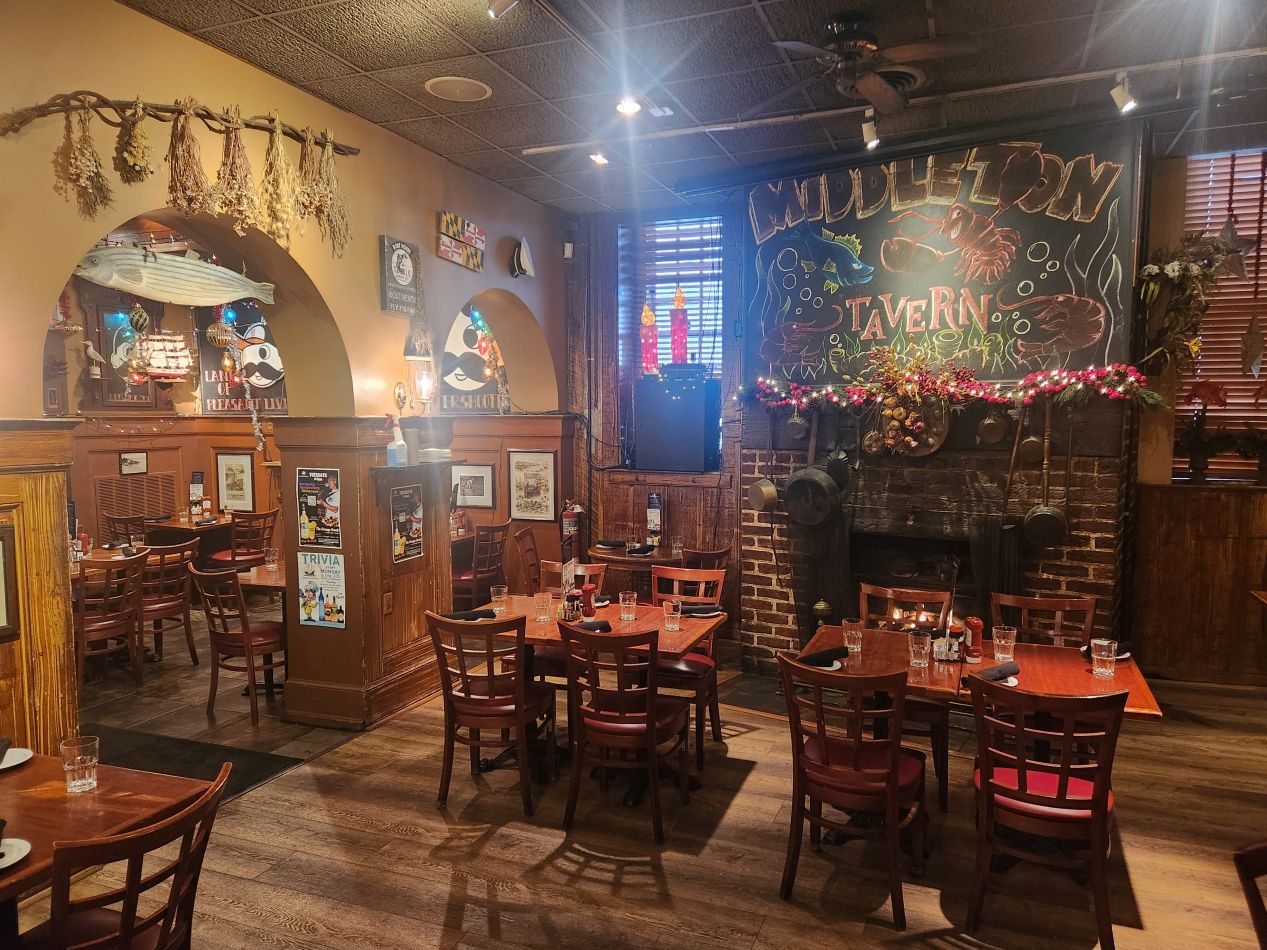


It was time for lunch and we were eager to get out of the rain so we stopped for our planned lunch at the historic Middleton Tavern. This is among the oldest surviving buildings in Annapolis and proudly proclaims that it dates to 1750 on its marquee. The building was originally an inn where many of the famous figures from the revolutionary period stayed while traveling among the colonies, then later became a general store and then a bar. It's been in continuous use for close to three centuries at this point, with the current inhabitant being a somewhat upscale restaurant that specializes in seafood. The lunch here was a bit on the pricey side, with the entrees mostly in the $20-40 range, but we could afford that for a special meal where we didn't have to pay for the kids. Liz ordered a sandwich while I had the penne pasta with jumbo lump crab which was absolutely amazing. This is one of those places that I had walked past a dozen times and where I always wanted to eat a meal, then finally had the chance to do so on this trip.


We had good weather luck on this day as the rain had stopped falling by the time that we finished eating lunch. The cloudy skies with just a hint of blue leaking through were actually kind of pretty to see as we walked along the waterfront. Spa Creek empties out into Annapolis Harbor proper which is frequently teeming with motorboats and small sailing craft during the summer months. This was about as deserted as I had ever seen the harbor in Annapolis, no doubt because it was December 29 on the calendar when there weren't exactly a lot of pleasure craft out on the Chesapeake Bay. Annapolis' history has always been tied to the water and this sheltered spot was the reason why the town was founded in the first place. At one time Annapolis was one of the busiest ports on the eastern coast of America, however the shallow waters of its harbor were unsuited for larger craft and it was eclipsed by Baltimore in the early 19th century. The nautical nature of Annapolis did make it the perfect location though for its most famous institution:


That being the United States Naval Academy which has been located here since 1845. This is the university that trains the officer corps for the US Navy, making it a very unusual institution of higher learning that shares this role with the other service academies. The Naval Academy enrolls a class of 1200 midshipmen each year and roughly a thousand of them make it to graduation at the end of four years. Tuition is free for the midshipmen who are accepted through the highly competitive application process, though it does come with a requirement of military service as a naval officer afterwards. We were entering the Naval Academy grounds through one of the pedestrian gates named after Commodore James Barry, then had to pass through security and show an official government ID to be allowed onto the campus. There was a sign announcing that foreign visitors were not allowed entry which was something I don't recall seeing before. We walked towards the visitor's center and passed Halsey Field House where I looked in through the window and took a picture of the big open space with the turf field. This building was constructed in 1957 and used to house the basketball team until a more modern facility was built in 1991; this is still where track and field competes today.

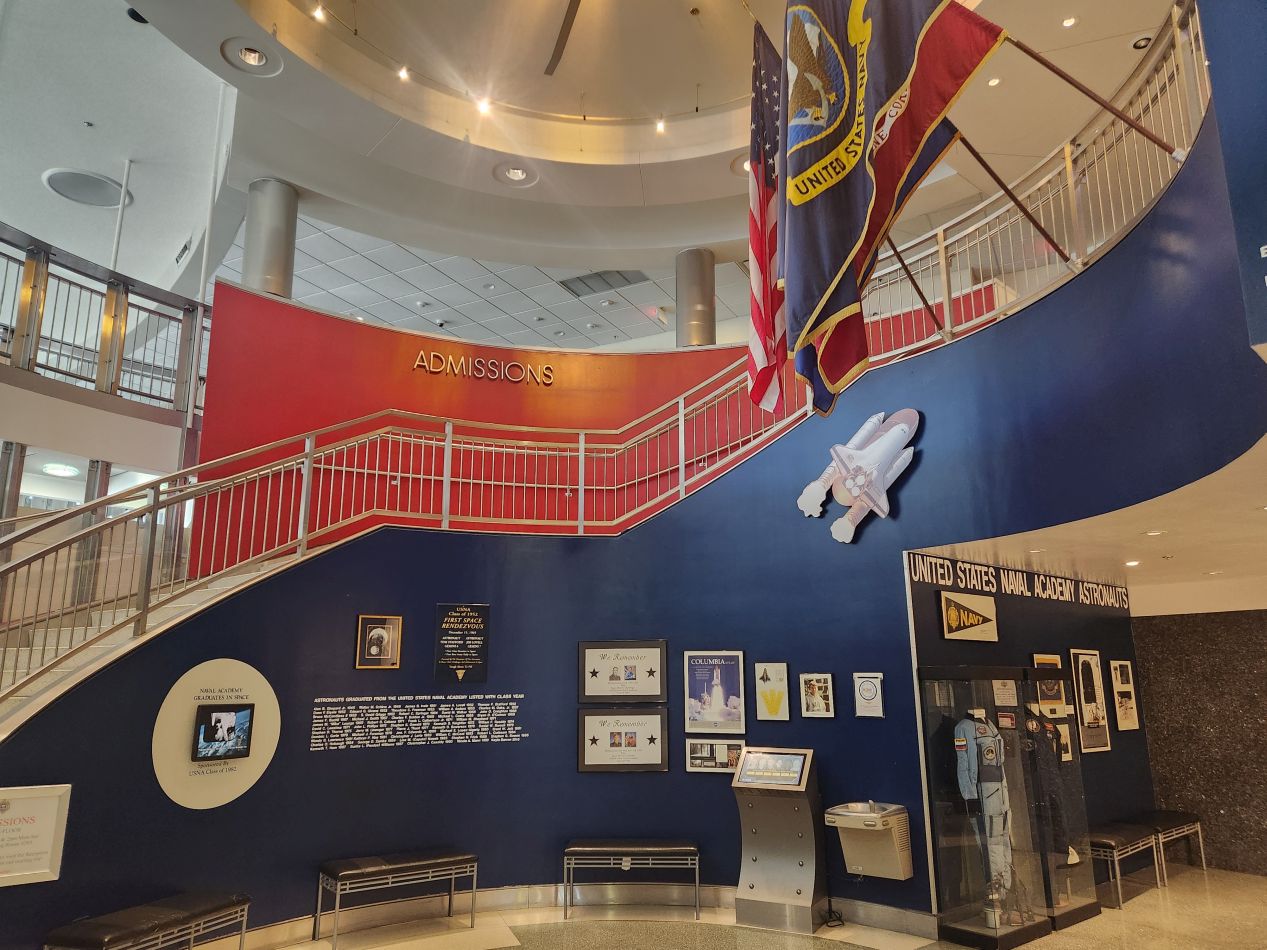


It was a short walk from the entrance gate to the Armel-Leftwich Visitor Center where these images were taken. There was a small museum within the visitor's center which covered the past history of the Naval Academy along with some more random exhibits. There was a section here about the USS Maryland battleship (BB 46) which was in service from 1921 to 1959, along with a whole wall devoted to the Naval Academy's mascot Bill the Goat. The admissions office was located here along with the gift store for the Naval Academy; as elsewhere at campus gift stores, visitors could purchase pretty much anything imaginable with the navy logo on it. Lots of the merchandise contained the "Go Navy, Beat Army" slogan in a reference to the bitterest rival of the Naval Academy, the United State Military Academy at West Point, New York. Army and Navy have been playing each other in football since 1890 and every single year since 1930. Navy leads the all time series with 64 wins against 55 losses and 7 ties, and had also won the most recent 2025 meeting in a dramatic 17-16 contest that set off a wild celebration in Annapolis.


After leaving the visitor's center, we headed towards the center of campus and passed by this massive building named Dahlgren Hall. This cavernous structure was built in 1903 originally for use as an armory before spending time hosting basketball games, graduation ceremonies, dances, and even a full sized ice rink from 1974 to 2006. It's currently used in an administrative capacity by the Business Services Division while still holding class reunions, concerts and dances. The big structure was deserted when we entered but had been decorated for the winter holidays with festive lights and a big Christmas tree. There was even an ATM for Navy Federal bank in the basement which we used to withdraw some cash in a convenient coincidence.


We were right around the corner from Radford Terrace, the green space located at the heart of the Naval Academy campus. This is where Bancroft Hall was located, the largest building at the Naval Academy and the largest college dormitory in the world. Bancroft Hall houses *ALL* of the midshipmen at the academy, which can theoretically be as many as 4800 people though in practice it's usually more like 4500 residents. Parts of the building are traditionally open to the public including its Rotunda entrance and the moving Memorial Hall that contains tributes to the midshipmen who have died during military operations. I'd visited Bancroft Hall several times before but unfortunately it was closed entirely on this occasion, with construction equipment blocking off the entrance area and obviously trying to get maintenance done before the middies returned from their winter break. This is a pretty good view of the interior that I was able to pull off the Internet since we couldn't visit on this trip.


The next site of interest on the campus grounds was the Naval Academy Chapel pictured above. This church was initially constructed from 1904 to 1908, then expanded upon in 1940 to double the size of the chapel up to its current capacity of 2500 people. The expansion took the form of an additional hallway jutting out towards our position from the perspective of these photos, and it had the effect of turning the chapel into the shape of a crucifix which I'd seen so many times elsewhere in cathedral design. This was also the location of the Herndon Obelisk captured in that last picture above, an unobtrusive monument unveiled in 1860 that has taken on a different meaning in the modern era. Starting in the 1950s, a tradition began that the freshman class of midshipmen (the plebes) will try to scale the obelisk to the top after which they unofficially graduate into upperclassmen status. That might look pretty easy but the obelisk is also traditionally coated in a thick layer of grease which requires a massive group effort to overcome. It usually takes an hour or two for someone to reach the top though an ungreased climb was finished in as little as a minute while one poor groups of plebes in 1995 took more than four hours to reach the summit.

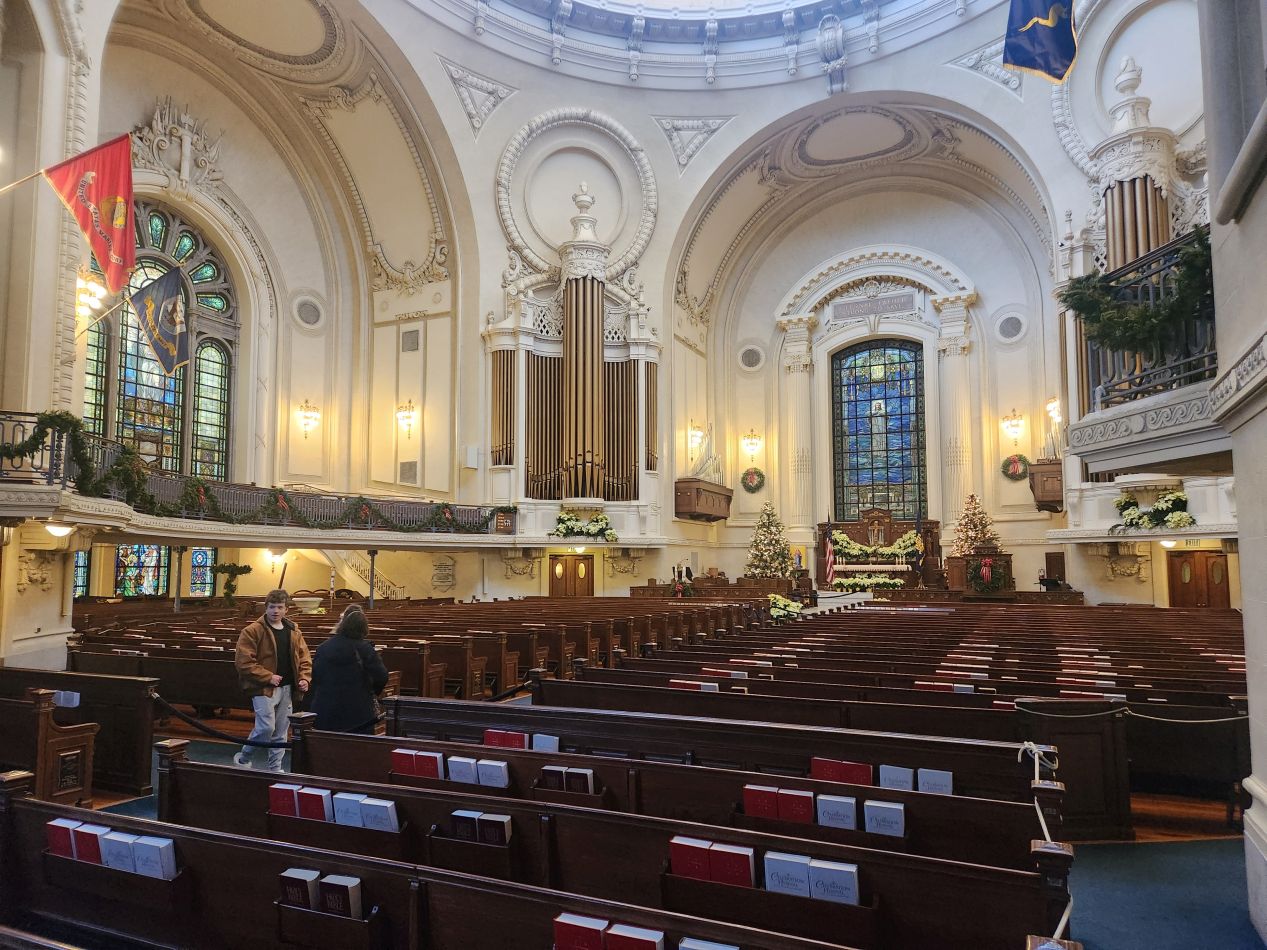


The interior of the Naval Academy Chapel was impressive and had me thinking of comparisons to the Cadet Chapel at the Air Force Academy, though this was a far more conventional building. There were a number of stained glass windows located in the original part of the chapel near the altar and they combined together with the holiday decorations to give the place a festive appearance. The chapel is also known for its huge dome which looks much like the one atop the Maryland State House, enough so that people sometimes get them confused. We had a great view of the underside of the dome from inside:


The windows up there were about 120 feet / 35 meters above the chapel floor and I wish that it would have been possible to climb up there for the views. Some of the stained glass windows in the chapel had unusual subject matter associated with the navy, such as the pictured window dedicated to Admiral David Farragut for his victory at Mobile Bay. There was also a stained glass window depicting Sir Galahad from Arthurian Legend because, uh, reasons? I think he was supposed to embody the chivalric ideals desired in naval officers or something like that. Then down in the basement of the chapel was a crypt holding the tomb of naval hero John Paul Jones. He was the first American captain to enjoy success against the British during the Revolutionary War and is generally considered to be the father of the US Navy. Jones died in 1792 and his remains were left in an unmarked grave in Paris before being identified and brought back to Annapolis for re-interrment here in 1913. The crypt was quite small and didn't have much beyond the sarcophagus, only a few small informational signs about Jones and some of the ships he captained like the pictured Bonhomme Richard.


Near the chapel on the west side of Radford Terrace was Preble Hall, a building dedicated to housing the United States Naval Academy Museum. This was another museum with free admission featuring exhibits and artifacts that traced the long history of the navy across the past two and half centuries. It started out with the chaotic formation of the navy during the revolutionary period, then moved ahead to its surprisingly large naval role in the War of 1812, before continuing on to the Civil War era and then into the 20th century. The Civil War was particularly awkward for the US Navy as fully a quarter of the officers defected to the Confederacy (in violation of their oaths) while the Naval Academy itself had to be moved temporarily to Newport, Rhode Island for the duration of the conflict. For those interested in the technical details associated with sailing and steaming vessels, this museum had lots of information on the technological transition from wooden to steel ships and the various steps along the way.

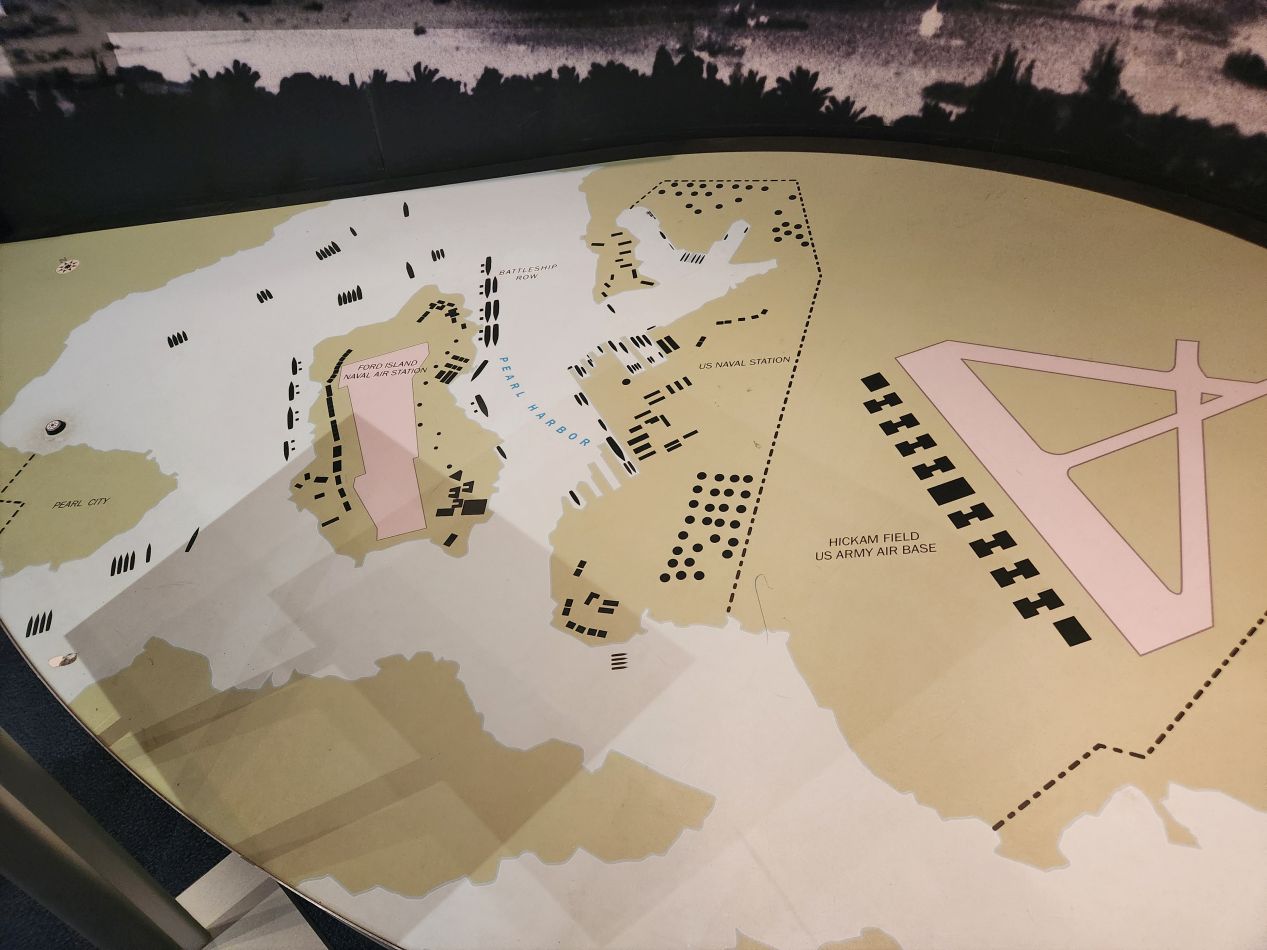


Other parts of the museum held a detailed explanation of the naval campaigns in World War II, including the pictured section about the attack on Pearl Harbor. The center of the museum held one of its most famous relics, the "Don't Give Up The Ship" flag flown by Commodore Oliver Hazard Perry during the War of 1812. This motto remains popular enough to be found all over the Naval Academy and plastered on a bunch of merchandise in the gift store. Interestingly enough, the Naval Academy has produced more astronauts than any other institute of higher learning at more than 50 in all. The museum had an exhibit on the various graduates of the Naval Academy who have gone into space, including this rock from the moon brought back by Apollo 14 in 1971. There are still conspiracy theorists out there who think that the moon expeditions were fake despite the obvious impossibility of something that enormous being staged, but the moon samples brought back by the Apollo astronauts should put any such dispute to rest. We have more than 300 kilograms of rock samples brought back from the Apollo landings, moon rocks that have been examined and studied for the last six decades by scientists all over the world. Are we supposed to believe that *ALL* of them are part of a vast conspiracy to accomplish... something by staging a giant fakery? Come on.


The upper floor of the museum had another unusual collection: lots and lots of ship models from the age of sail. The museum has dozens of these things which reproduced ships from the 17th, 18th, and 19th centuries in painstakingly accurate detail. If you ever wanted to know all about the different types of decks and various types of sails on these historic ships, this was the place for you as the museum walked visitors through the many, many components needed to build and operate these things. Unfortunately I had to hurry throught the museum without having a chance to stop and read through any one section in detail. I could have easily spent an hour or more in this museum if we hadn't needed to get back home before it got too much later. I would definitely recommend it for anyone who enjoys naval stuff or military history.


These were a few more pictures taken on the western side of the Naval Academy campus near where College Creek runs through the grounds. I went a bit out of my way to stop at the Tripoli Monument, the oldest military monument in the United States that dates back to 1806 and commemorates the naval conflict with the Barbary pirates. The Tripoli Monument was in sad shape during this visit though, fenced off due to an unrelated construction project taking place on the nearby halls, and seemingly in dire need of a cleaning. Hopefully this will be fixed up soon and the monument restored to its prior state. I also walked past Alumni Hall, where the current basketball teams play on the naval campus. Navy basketball has never been particularly famous (it's hard to attract the best recruits since attendance at the Naval Academy comes with that military service requirement) though David Robinson did play for Navy from 1984-1987 which was by far their most successful era. Then I walked past Worden Field, which was where the football team played in the early 20th century and now is used for military drills, before wrapping up at this coffee shop - which was closed for the day, ack! We'll have to come back again to find out if the Naval Academy can brew a decent cup of coffee.

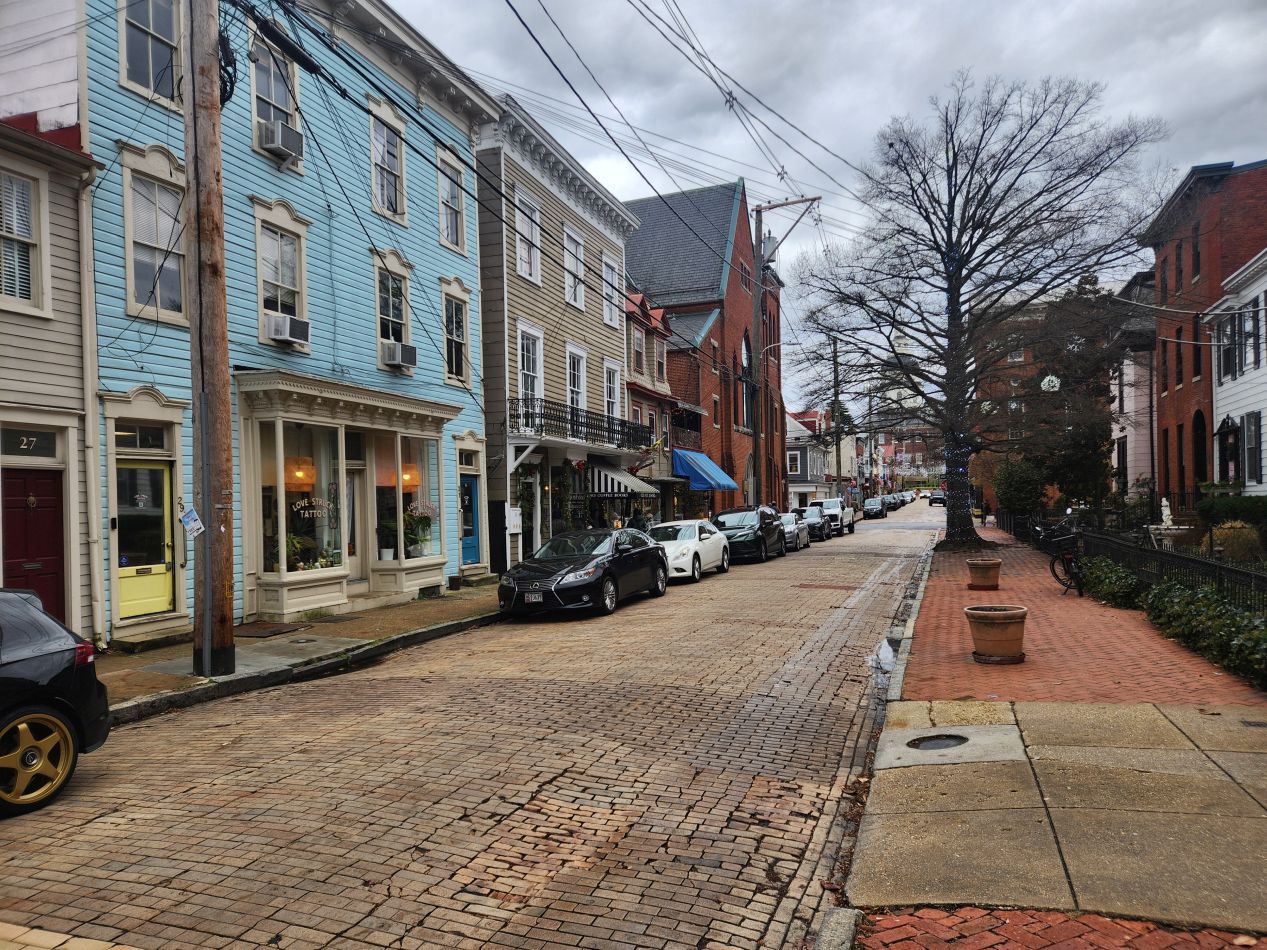


Since we weren't able to get a drink on the naval campus, we stopped at a little bookstore on Maryland Avenue named Old Fox Books and Coffeehouse. This was a cute store with a real fire burning in the fireplace, though that also made it uncomfortably hot for anyone wearing a heavy coat. Then we walked the rest of the way back towards the Maryland State House where we passed by more of these boutique stores and cafes. The sun was peering out from behind the clouds and it was quite pretty with everything decorated for the winter holidays; we usually don't walk through this part of Annapolis and resolved that we'd have to come back again during the summer months.
From there we headed back home after spending this afternoon in Annapolis. The historic part of the town is quite compact and easily walkable, with the two of us able to visit all of the famous areas in a couple of hours. There are several other historic houses that now operate as small museums which we didn't visit on this trip, but otherwise the main activity that we weren't able to do was take a boat trip out into the harbor. That's a lot of fun to do during the warmer months and I'd recommend it for anyone who might be visiting Annapolis. Hopefully this was a helpful overview of some of the main attractions to be found in my own state's capital - thanks for reading along.


